About Phaser Pedals
A phaser pedal splits your guitar and shifts the phase of one side, then sweeps the notch that makes. The result is swirl: a chord that turns in the air, a lead that feels like it is rotating, a clean part that suddenly has weather inside it. Two-stage boxes are mellow. Four-stage boxes are the classic orange-box sweep. Six-stage and dual-voice machines go from vintage swirl into vibe, flange, and brand-new notches. This page is that family, from a dedicated Strymon phaser to the MXR that taught rock how to swoosh.
If you want jet-plane whoosh instead of swirl, see flanger pedals. For chorus and vibrato, wander chorus pedals.
How to Choose
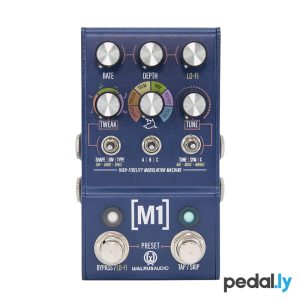
- Modulation machine: phaser plus chorus, tremolo, rotary, and more in one brain. The Walrus Mako M1.
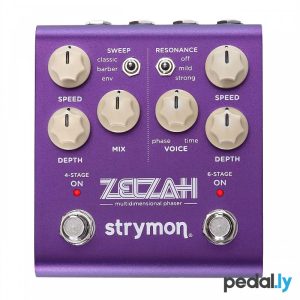
- Dedicated phaser with extra voices: vintage 4-stage, 6-stage, and harmonic phasing that can lean into vibe and flange. The Strymon Zelzah.
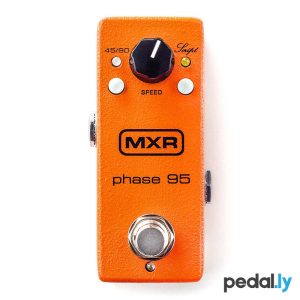
- Classic orange-box sweep: four-stage FET phaser, the sound people mean when they say Phase 90. The MXR Phase 90.
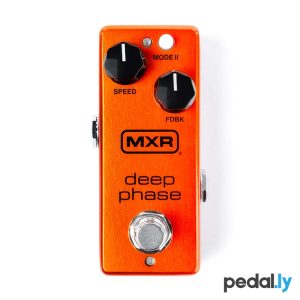
- Deeper swirl: more stages, more whoosh, still an MXR. The MXR Deep Phase.
- Compact / always-on: a smaller Walrus phaser you can leave on a clean chord. The Walrus Fundamental Phaser.
Where Most Players Start
- Walrus Mako M1: six modulation programs including phaser, for players who want the whole swirl family in one box.
- Strymon Zelzah: vintage and harmonic phaser voices, the dedicated Strymon that still sets the bar for swirl.
- Walrus Fundamental Phaser: Walrus voicing in a smaller footprint, for movement that never argues with the vocal.
- MXR Phase 90: the orange box. One Speed knob. The sweep a lot of records actually used.
- MXR Deep Phase: a thicker MXR swirl when Phase 90 is not quite enough whoosh.
The Mooer Ninety Orange is the next stop if you want that same orange-box idea in a micro housing. Browse the phaser pedals below and pick the one that sounds like the record in your head.